World building team
Artists, storytellers & technical leaders
Meet the people who built the video game world on which the comic series is based — concept artists, storytellers, and technical leaders behind the free-to-play game that reached over 2 million players across more than 140 countries.


From the archive
The history of Mars Frontier
How Mars Frontier grew from a graduate-school independent study project into a sci-fi war game that reached millions of players — art, engine, story, and the world they built.
Total players
2,247,586
Lifetime accounts across the free-to-play era
Total time played
1,622 years+
Combined hours in-game — more than a millennium and a half
Origins
The History of Mars Frontier
Mars Frontier began as a graduate-school independent study project — not a formal research lab, but a student-driven experiment. The goal: a fact-based educational game about interplanetary colonization, tested with an inexpensive video trailer and early concept art.
It was a low-budget project that pulled in a mix of freelance and early-career concept artists and illustrators to build a world as an experiment: prove the fantasy could feel real before anyone wrote a line of production code.
The pure educational real-time strategy (RTS) idea did not look commercially strong, so the team pivoted toward a science-fiction wargame. NASA-era machines became weaponized “ancient” tech for settlers three centuries later — harvesting tools turned into engines of war.
Rovers
The Mars Rovers
Inspired by the real-world adventure of NASA’s Curiosity mission, the team asked a simple question: what happens centuries later when settlers live on Mars — and the nuclear-powered rover, optimized for Martian terrain, becomes a blueprint for battle units? That idea seeded the combat fantasy: hardware designed to explore, re-purposed in desperation as machines of war.
Engine
Buildings and Game Engine
Development ran from late 2011 into early 2012. Early sketches were rendered into 3D by talented freelancers from the visual-effects industry. Instead of spending weeks on cinematic, movie-level renders, those artists rapidly built out in-game assets as low-poly models — fast enough to iterate with a tiny indie budget and limited time. In the same week it would take a strong VFX artist to model one movie-level asset, they could create dozens of low-poly game assets for Mars Frontier gameplay.
Those models were positioned, lit and processed through a custom rendering pipeline to produce rasterized sprite sheet assets browsers could draw to run animated scenes. In parallel, the engine was built from scratch on experimental HTML5 in 2011 — web standards that would not be finalized for another two years — as a bet that native browser games could replace Adobe Flash.
After several generations of building refinements, the structures began to define the game world — and set the context for the storylines and characters to come.
Glamour shots
3D models of vehicles and buildings were rendered into 2D views, then illustrators painted over the art to drive detail, rendering, explosions, light, shadow, and excitement — bringing the scene to life. These mini-art posters ran throughout in-game events and promotions, and we printed mini-posters of them for the production crew.
Transports
Transports
Just as the original Mars rovers — Sojourner and Curiosity — were reimagined as weaponized combat units, the same logic was applied to the colony’s civilian fleet. Work trucks, cargo haulers, and utility vehicles were stripped down and refitted for war, creating a new class of light and heavy Transports that could move troops, fire support, and heavy weapons across the battlefield.
Characters
Characters
The first character was the in-game narrator Valentina, named after Russian cosmonaut Valentina Tereshkova, the first woman in space. Originally a sarcastic, dry-witted sidekick, she evolved into a more edgy, unemotional space companion — bordering on robotic. In the graphic novel she is reimagined as a robot character rather than human — carrying that edge fully into machine form.
Character development
Faces of the frontier
Character concept designs from the original game era. Mars Frontier ran “Live Ops” events every two weeks with new bases and levels showing up on the world map for Clans to battle over and control. The more strong points held by a Clan, the bigger the bonuses, and the more rare loot unlocked.
Auto-scrolls slowly · hover to pause · click a portrait for full size
Expansions
Expansions
Since the release of Mars Frontier in 2012, two expansion packs followed.
WAR STAR EMPIRE is set in a distant future where sentient robots evolved into all-powerful “Machine Lords” who dominate the galaxy. After a cataclysmic battle, survivors escape to Minoa — the birthplace of the Machine Lords, once known as Mars.
BATTLEFRONT MARS begins immediately after the original storyline and before War Star Empire: a period of hyper-colonization after discovery of vast water reserves and terraforming tech draws migrants from a dying Earth.
Legacy
Legacy · Tournaments, world events, and end of life
Competitive seasons, tournaments, and monthly world events marked the game’s peak — thousands of commanders fighting for territory and bragging rights. Battlehouse, a Canadian company, later acquired the video game business and operated the free-to-play service through its final years until end of life in 2023. SpinPunch, Inc., the original studio behind Mars Frontier, evolved the collaboration technologies built for its online war games into real-world command and control infrastructure — turning live multiplayer coordination into tools for the field.
Evolution
Evolution · From game world to comic series
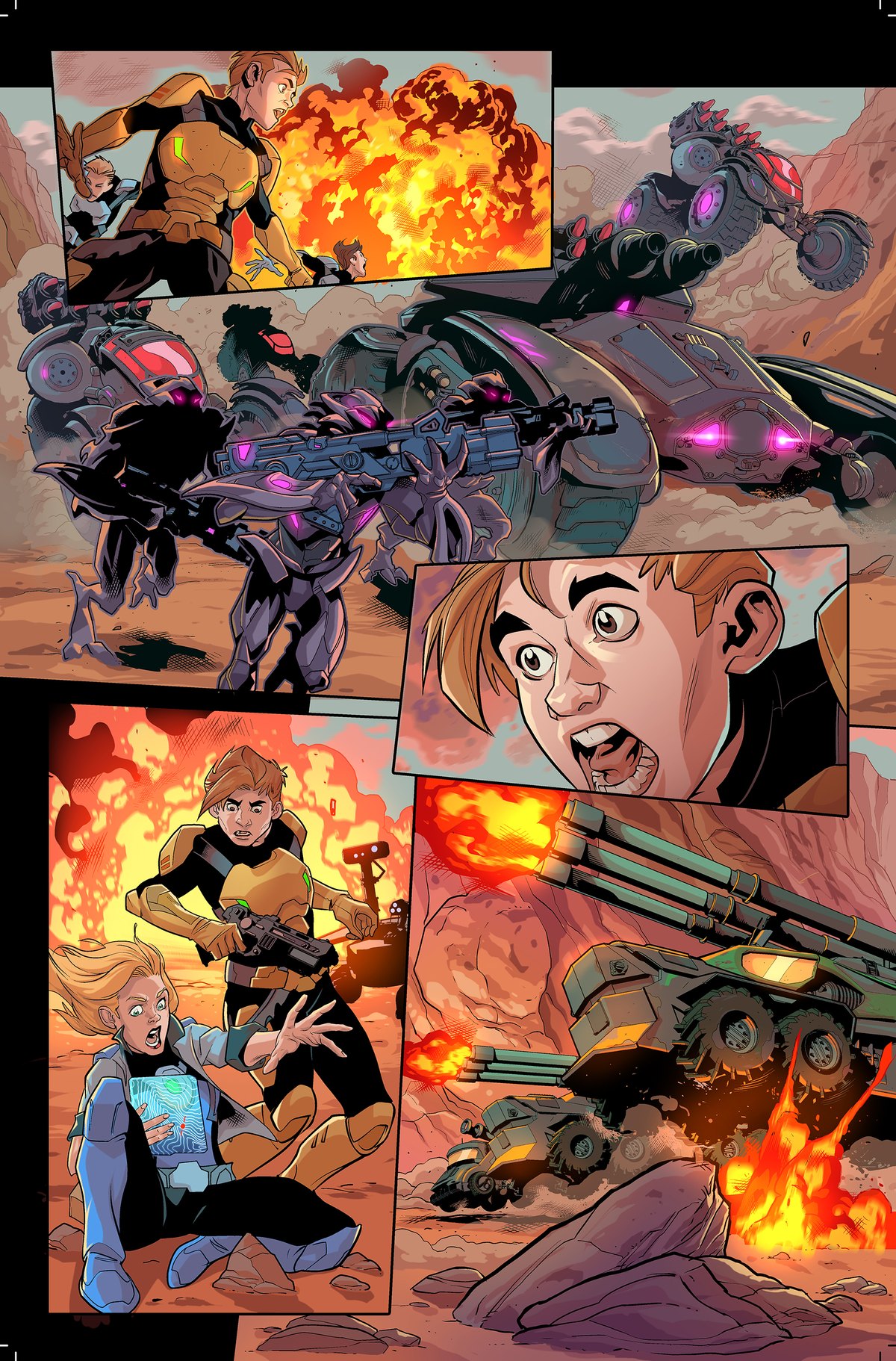
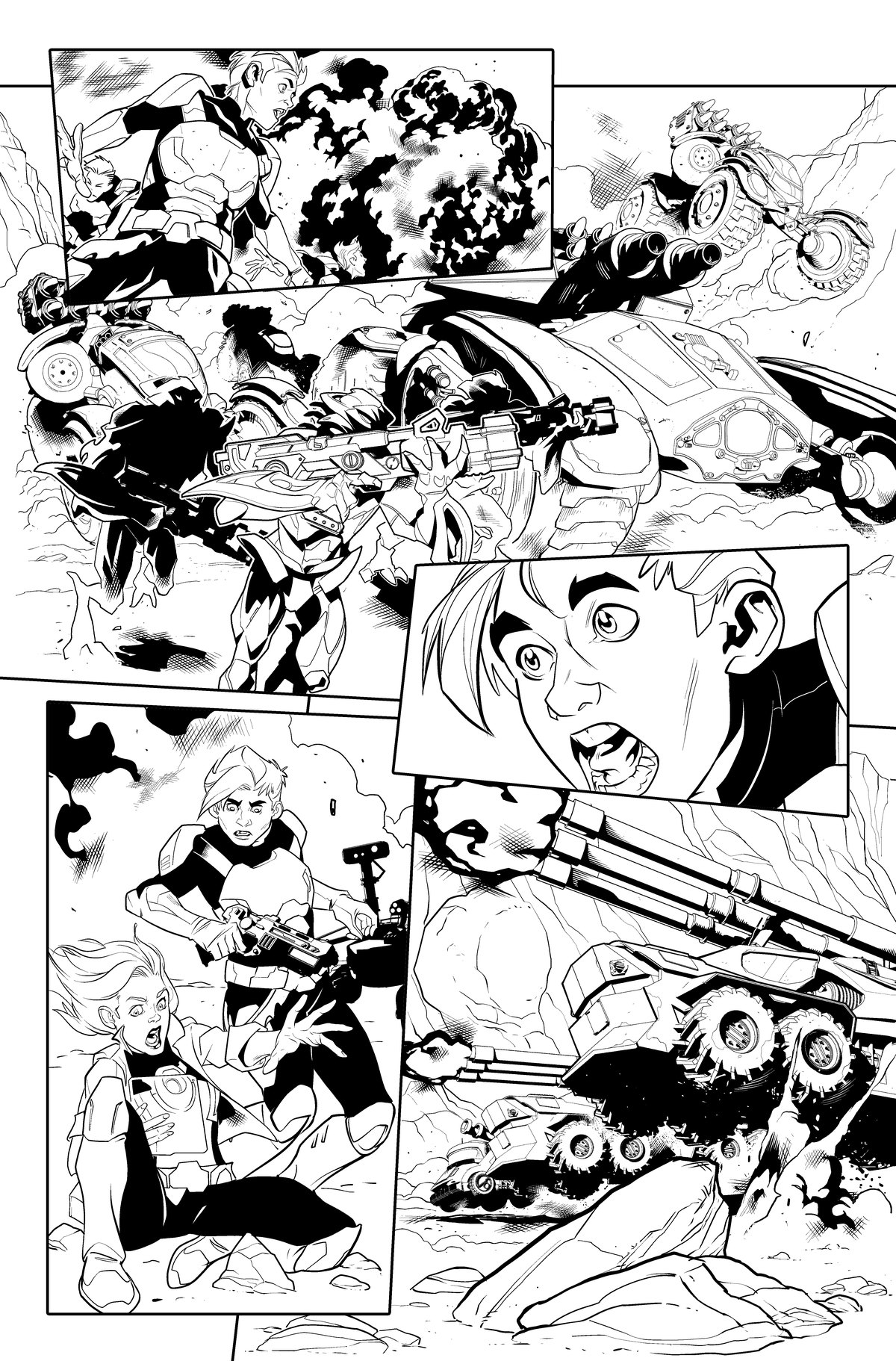
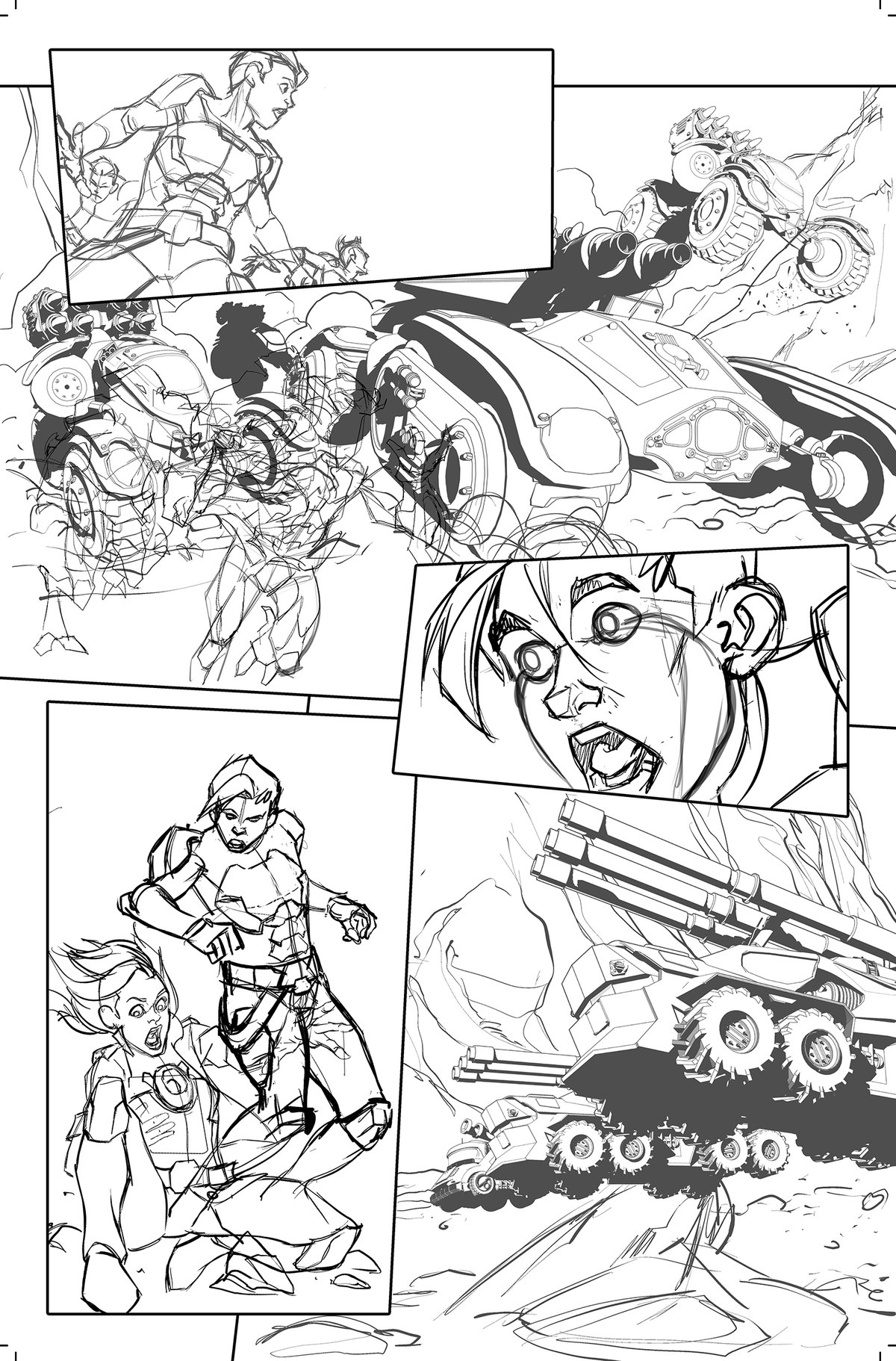
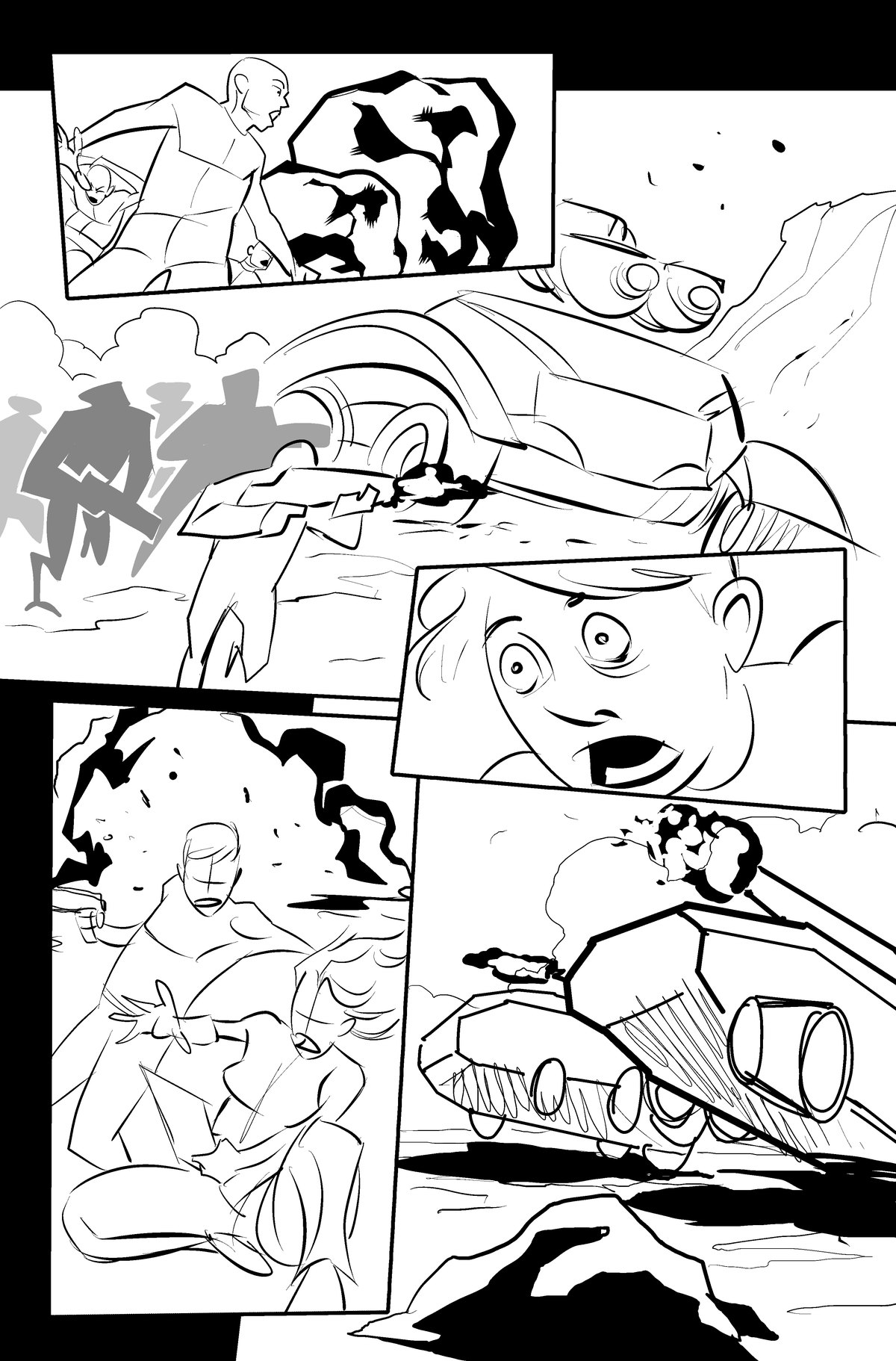
The next chapter is not a reboot — it is an evolution. A new creative team is building an original young adult action science-fiction comic series and graphic novel in this universe: Omar Francia and Ricardo Sanchez (met through the Comic Creator Connection) as co-creators with Ian Tien, with Simon Bowland and Taylor Esposito on lettering, and Shahriar Fouladi editing. Issue 1 is complete and heading toward Kickstarter.
Full Steam · live on Mars
Massively multiplayer real-time strategy
At full steam, Mars Frontier ran as a massively multiplayer online real-time strategy game — often called an MMORTS — where Clans of up to fifty players attacked and defended giant world maps drawn across the real geography of Mars.
Massive armies and multiplayer teams waged battle for territory and strong points: control of resources and advanced manufacturing that decided who could outfit the next wave of combat rovers and weaponized transports.
Alongside the always-on multiplayer map, bi-weekly in-game events offered extra resources and technology unlocks. Players could run them alone or in teams — giant world events that became the background for the game’s characters and storylines, season after season.
World map · Clans across the face of Mars
Recorded world-map play on real Mars geography — massively multiplayer Clan battles of up to fifty players fighting across the face of the planet.
The story
Mars Frontier — The Story
After 300 years of robotic exploration, humans arrive on Mars for the first time. It’s a one-way ticket and a race to rule the planet. Mars, cultivated by robots and a genetically engineered clone workforce, has become a chaotic mass of war-torn regions.
By the time of the graphic novel, those ancient wars have left only one human stronghold standing: Olympus. Cybernetic overlord Sirenium commands an Immortal robotic army that has already broken every outer settlement — and is now poised to wipe Olympus off the map.
A squad of young cadets on what should have been a routine training mission is thrown into the full-scale war. Squad leader Terran must keep his unproven team alive while science officer Winter pushes for answers no commander wants to hear, and Valentina — a loyal machine companion — walks the line between ally and weapon.
In the arc that carries Issues 3 and 4, the cadets chase Mars Alpha: a secret ancient weapon buried in the red dust, rumored to be the last hope for human survival. Alliances fracture. Sirenium’s forces close the ring around Olympus. What the team uncovers about the Immortals — and about themselves — forces a choice no training manual ever covered.
Can an unproven squad awaken technology older than the colony and hold the line, or is this humanity’s end on Mars? The frontier does not forgive hesitation — and every step toward Mars Alpha raises the cost of failure.